Lean Meats: Protein Sources and Salad Examples
Lean meats are excellent sources of high-quality protein that enhance the nutritional value of salads. Chicken, turkey, and fish deliver essential amino acids with minimal fat.
Incorporating lean meats not only boosts protein content but also adds rich flavors and satisfying textures to your salad, making it a more complete meal option.
These meats serve as the protein foundation for many delicious and healthful salad recipes.
Popular Lean Meats for Salads
Chicken breast is a staple lean meat, widely used due to its high protein and low fat. Turkey breast offers a similarly lean option with a mild flavor that blends well in salads.
Fish such as salmon and grilled shrimp introduce omega-3 fatty acids while providing a lean protein boost. They add diversity and nutrients to salad meals.
Other lean meats like lean cuts of pork or lean beef can also be used sparingly to create flavorful protein-rich salads.
High-Protein Salad Recipes with Lean Meats
One popular recipe is the Chopped Chicken Bacon Ranch Salad, combining pan-fried chicken with avocado and ranch dressing for about 30 grams of protein per serving.
Buffalo Chicken Salad Bowls elevate protein further, featuring roasted cauliflower and a Greek yogurt-based ranch that delivers up to 50 grams of protein.
Grilled shrimp salads, such as a Summer Detox Salad with grilled romaine and cilantro dressing, offer a lighter yet protein-packed option at 27 grams per serving.
Legumes as Plant-Based Protein in Salads
Legumes are key plant-based protein powerhouses ideal for enriching salads with nutrients. Their versatility suits vegetarian and vegan diets well.
Incorporating legumes like chickpeas, lentils, and beans enhances protein content while adding fiber and other essential nutrients for balanced meals.
These plant proteins bring unique textures and flavors, making salads more satisfying and nutritionally complete.
Common Legumes Used in Protein Salads
Chickpeas are one of the most popular legumes, valued for their mild taste and firm texture that complements fresh vegetables and herbs in salads.
Lentils provide a hearty, earthy flavor and cook quickly, making them convenient for nutritious salad bases or toppings.
Various beans like cannellini, black beans, and kidney beans add variety, rich protein, and fiber, enhancing both taste and health benefits of salads.
Vegetarian and Vegan Salad Recipes Featuring Legumes
The Greek Chickpea Salad mixes cucumbers, tomatoes, and peppers with chickpeas for a fresh, protein-rich vegan meal option that’s easy to prepare.
Cumin Chickpea Salad with mint chutney offers bold flavors through spices while sustaining high protein levels for vegetarian and vegan diets.
White Bean Radicchio Salad combines cannellini beans with lemon and parmesan (omit for vegan) or nutritional yeast, delivering satisfying plant protein and flavor complexity.
Nutritional Benefits of Legume-Based Salads
Legume salads provide high protein content while being rich in fiber, which supports digestion and prolonged satiety, ideal for meal replacements.
They contain essential vitamins and minerals, such as iron, folate, and magnesium, contributing to overall health and energy levels.
Thanks to their low fat and calorie density, legume-based salads align with weight management while promoting muscle repair and immune function.
Grains Providing Protein and Fiber
Whole grains contribute essential protein and fiber to salads, boosting their nutritional profile significantly. They offer complex carbohydrates for lasting energy.
Including grains such as quinoa, farro, and brown rice makes salads heartier and more satisfying, transforming them into balanced meals.
These grains also add texture and unique flavors, complementing both lean meats and legumes in protein-packed salads.
Types of Whole Grains in Protein Salads
Quinoa is a standout grain, as it is a complete protein containing all nine essential amino acids. It combines well with meats and legumes for balanced salads.
Farro offers a nutty flavor with about 6 grams of protein per quarter cup, ideal for grain bowls featuring roasted vegetables and fresh herbs.
Brown rice provides fiber and a mild taste, acting as a neutral base that enhances the texture and nutritional content of salads.
Other grains like barley, bulgur, and wild rice also add variety, contributing both protein and fiber to enrich salad meals.
How Grains Complement Meats and Legumes in Salads
Grains add the complex carbohydrates and fiber needed for energy and digestion, balancing out the protein-rich components from meats and legumes.
Combining grains with lean meats and legumes creates a complete amino acid profile, ensuring all essential nutrients for muscle repair and satiety.
This synergy makes salads more filling and nutritionally dense, ideal for meals that fuel your body and keep you satisfied longer.
Additionally, grains absorb dressings and flavors well, enhancing the taste experience while supporting a wholesome nutrient blend.
Combining Ingredients for Nutrient-Dense Salads
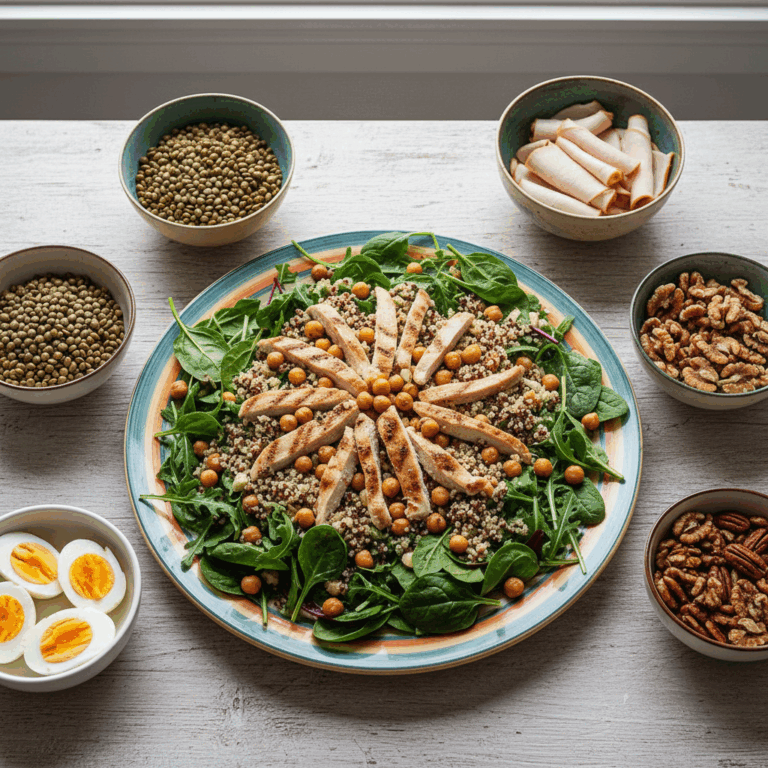
Combining lean meats, legumes, and grains creates salads that are not only tasty but also highly nutritious, providing a balanced mix of protein and fiber. These combinations ensure sustained energy and fullness.
By integrating diverse protein sources, these salads offer a broad range of amino acids and essential nutrients, optimizing muscle repair, digestion, and overall health. They suit various dietary preferences.
The synergy of these ingredients transforms simple salads into hearty meals that satisfy hunger and nourish the body with every bite, promoting an enjoyable and healthful eating experience.
Mixing Lean Meats, Legumes, and Grains
Mixing lean meats like chicken or tuna with legumes and grains enhances the protein content while adding texture and flavor variety. This balance creates a complete, nutrient-packed salad.
Legumes add plant-based protein and fiber, while whole grains provide complex carbs and additional protein, making the salad more filling and sustaining throughout the day.
Combining these ingredients also increases the diversity of vitamins, minerals, and antioxidants, supporting overall wellness and digestive health in a single meal.
Did You Know?
Combining plant and animal proteins in a salad improves the protein quality by supplying all essential amino acids, making it an excellent choice for muscle growth and repair.
This synergy helps vegetarians and omnivores alike meet their protein needs more efficiently while enjoying delicious and versatile dishes.
Sample High-Protein Salad Recipes and Ideas
Try a Chicken, Quinoa, and Chickpea Salad with fresh herbs and lemon vinaigrette for a refreshing meal delivering ample protein and fiber with bright flavors.
A Tuna, Lentil, and Farro Bowl combines savory tuna, hearty lentils, and chewy farro with tomatoes and olive oil dressing for a nutrient-rich, satisfying dish.
For a seafood twist, a Shrimp, White Bean, and Brown Rice Salad with arugula and citrus dressing offers a balance of lean protein, fiber, and healthy fats in every bite.