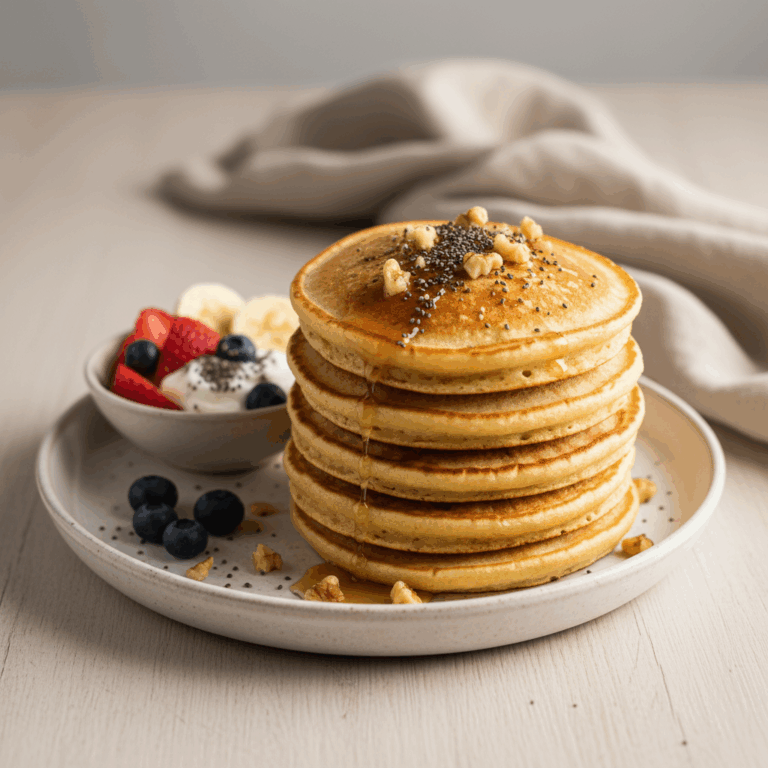
Benefits of High-Protein Pancakes
High-protein pancakes deliver a powerful nutritional boost for your breakfast. They support muscle repair and provide sustained energy to keep you active throughout the day.
Using wholesome ingredients like oats, eggs, and protein powder, these pancakes are both delicious and highly beneficial for your overall health and fitness goals.
With their rich protein content, high-protein pancakes are perfect for anyone aiming to enhance muscle recovery or maintain steady energy levels during busy mornings.
Supporting Muscle Repair and Energy
Protein is essential for muscle repair, especially after exercise. High-protein pancakes offer a convenient way to supply your body with the nutrients it needs.
By including eggs, protein powder, and milk, these pancakes ensure a steady release of energy that helps fuel your daily activities and workouts.
Consuming protein-rich meals in the morning helps kickstart muscle recovery and sustains energy levels for hours, reducing mid-morning fatigue.
Keeping You Full and Satisfied
High-protein pancakes help you feel full longer, reducing hunger and unnecessary snacking between meals. This supports better weight management.
The satiety provided by protein, combined with fiber from oats or bananas, makes these pancakes an ideal breakfast choice for lasting satisfaction.
Enjoying a protein-packed meal in the morning stabilizes blood sugar levels, promoting balanced energy and cravings throughout the day.
Ingredients for Nutritious Pancakes
Choosing the right ingredients is key to making nutritious, high-protein pancakes that are both delicious and healthful. These ingredients balance protein, fiber, and natural sweetness.
Incorporating wholesome components like oats, eggs, and natural sweeteners ensures that your pancakes provide sustained energy and essential nutrients for a robust breakfast.
Exploring various combinations helps customize pancakes that fit your taste and dietary needs, making mornings more enjoyable and beneficial.
Common High-Protein Ingredients
Eggs are a staple for high-protein pancakes, offering complete protein with essential amino acids. They help create a fluffy texture and rich taste.
Rolled oats add fiber and a moderate amount of protein, aiding digestion and prolonging fullness. Milk or dairy alternatives contribute additional protein and moisture.
Protein powder, such as whey or plant-based options, is often used to boost protein content efficiently. Cottage cheese and Greek yogurt can also enhance protein while adding creaminess.
Natural Sweeteners and Fiber Sources
Natural sweeteners like mashed bananas and honey add subtle sweetness without refined sugars. Bananas also bring vitamins and fiber, supporting digestive health.
Adding ingredients like ground flaxseed or chia seeds enhances the fiber content, promoting satiety and stable blood sugar levels throughout the morning.
These wholesome sweeteners and fiber sources work together to improve flavor and nutritional value, making pancakes a satisfying and nutritious option.
Alternatives to Protein Powder
For those avoiding protein powders, eggs and dairy products like cottage cheese and Greek yogurt serve as excellent natural protein sources in pancakes.
Nut butters can also increase protein content while adding rich flavor and healthy fats, contributing to a balanced and tasty meal.
Using whole food ingredients ensures pancakes remain fluffy and nutritious without relying solely on supplements, perfect for clean eating preferences.
Protein Content and Serving Examples
High-protein pancakes typically contain between 15 and 30 grams of protein per serving, depending on the ingredients used. This amount supports muscle repair and keeps you energized.
Protein content varies due to factors like the number of eggs, type of protein powder, and added dairy products. Many recipes offer a perfect balance for breakfast gains.
Understanding protein quantities helps you tailor your pancakes to meet your nutritional goals, whether for weight management, muscle building, or overall health.
Typical Protein Amounts Per Serving
Standard recipes often yield pancakes with around 20 grams of protein per serving. This is achieved using eggs, oats, and a scoop of protein powder or dairy.
Some versions include multiple eggs and milk to increase protein to 30 grams or more, offering a more substantial meal for active individuals or those with higher protein needs.
For example, pancakes made with eggs, rolled oats, and Greek yogurt can provide a balanced protein boost without necessarily adding supplements like powders.
High-Protein Variations and Boosters
Boost protein content by adding cottage cheese, nut butters, or extra egg whites to your batter. These ingredients increase nutrients and flavor richness naturally.
Incorporating seeds like chia or flaxseed not only adds fiber but also contributes minor protein, enhancing nutritional value and satiety in each bite.
Interesting Fact
Some athletes consume pancakes with added protein powder and egg whites, reaching 35 to 40 grams of protein per serving, ideal for recovery and muscle building.
Experimenting with different boosters lets you customize pancakes for your specific dietary requirements without sacrificing taste or texture.
Customization and Dietary Options
High-protein pancakes can be tailored to fit various dietary needs, making them accessible to everyone. Whether you require gluten-free or dairy-free options, there are versatile recipes available.
Customizing pancakes allows you to enjoy a nutritious breakfast that aligns with your preferences, dietary restrictions, and flavor desires without sacrificing protein content or taste.
By incorporating diverse ingredients and toppings, you can create a satisfying and healthy meal that suits your lifestyle and supports your fitness or wellness goals.
Gluten-Free and Dairy-Free Choices
For gluten-free pancakes, alternatives such as oat flour, almond flour, or coconut flour are excellent substitutes that maintain protein content and texture.
Dairy-free options include substituting cow’s milk with almond, soy, or oat milk, which also add different flavors and nutrients to your pancake batter.
Using plant-based protein powders or eggs and nut butters can help keep pancakes high in protein while adhering to gluten and dairy sensitivities.
These alternatives ensure you don’t miss out on a nutritious and protein-rich breakfast while accommodating common dietary restrictions.
Flavor Enhancements and Toppings
Enhance your pancakes with natural toppings like fresh berries, sliced bananas, or a drizzle of honey to add sweetness and extra nutrients.
Nut butter spreads such as almond or peanut butter contribute healthy fats, additional protein, and a rich taste, making each bite more satisfying.
Spices like cinnamon or vanilla extract can boost flavor without adding calories, while toppings like Greek yogurt or coconut cream provide creaminess and protein.